Of the many dog DNA tests on the market, which one is right for you and your pet? How do they work, are they accurate, and what can you learn?
For the genealogically curious, DNA tests are increasingly popular as holiday gifts, and this is not just limited to test kits for humans: Dog DNA tests are now available to give you insights into your pooch’s genetic makeup.
While genetic testing for human ancestry and disorders has been around for several years, dog DNA tests that can identify the breed of your four-legged-friend have appeared relatively recently. So, should pet owners invest their hard-earned money in a dog DNA test, and what can they actually reveal?
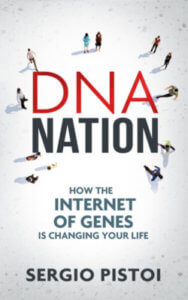
(Article featuring an interview with Sergio Pistoi about his book DNA NATION)
Exactly how accurate are DNA tests, and how much can your genetic data really reveal about you? To find out, we asked a molecular biologist.
With genetic testing for health, ancestry, paternity and more becoming increasingly popular, many people are left wondering: exactly how accurate are DNA tests? Whether you are taking a DNA test to build your extended DNA family tree with an AncestryDNA(opens in new tab) testing kit, or want precise information on hereditary health conditions with 23andMe(opens in new tab), it is important to understand how accurate genetic tests are, and what information we can rely upon.
How accurate DNA tests are relies greatly upon the kind of test being taken. “The accuracy of results depends on the specific question we ask, and on how complex is the genetics behind a trait,” Sergio Pistoi, a molecular biologist and author of “DNA Nation(opens in new tab)” (Crux Publishing, 2019), told Live Science. For example, tests for traits that depend on a single gene, called monogenic traits, provide much more reliable results, because you can see whether a disease-causing mutation or another trait is present. Read Full Article: https://www.livescience.com/how-accurate-are-dna-tests
Even with the advent of vaccines, strategies for rapid and affordable testing for COVID-19 are still paramount. The lack of evidence that the current vaccines can completely stop people from being infected and the emergence of virus variants make widespread testing crucial. But what do we mean as a “rapid” test and how do they compare to “standard” ones?
Remember that when you buy one of those genome testing kits—and eventually, you will
Sergio Pistoi
When I was a young student in Paris, the City of Love, girls at parties would what I did for a living. I still recall their unsettled looks when I answered “molecular biologist,” which would send them running to powder their noses. They never came back. Back in the early 2000s, the only people who could get stuck in a dreary conversation about DNA, Mendel’s peas and alleles were four-eyed genetic nerds who wasted their lives in laboratories. We were undateable, and the level of endogamy amongst us was startling.
Today, the tables have turned. Millions of people are spitting into a tube to get their genes analyzed and share the results on social networks. Genealogy websites, the second-most visited category in the U.S. after porn, are full of enthusiasts discussing chromosome markers like they were at a laboratory meeting. Celebrities get their genes tested during talk shows, and YouTubers upload videos on their spit-into-the-tube experience. Everyone is hungry to learn about their DNA. DNA has become trendy, my social life has significantly improved, and it’s a wonderful time to be a genetic nerd.
Much of the credit goes to direct-to-consumer genomics for shifting the public perception of DNA from “boring stuff” to fascinating, personal journey. Reading our DNA and using it online is incredibly informative and fun, and these tools have engaged the public into genetics to a level that science writers could have only dreamed of. To write my book DNA Nation I tried out at least two dozen applications where I could use my DNA file.
With the pervasive success of this technology, however, also comes a reality distortion field. In the enthusiasm surrounding the progress of genomics, we end up overstating the real nature of our DNA and believing that it is more important than it is. The Oscar for Genetic Ravings goes to Advanced Technologies, an Indian DNA company whose website claims that genetic code is a “Divine Writing,” but genetic determinism—the idea that DNA will determine our fate and identity—is deeply ingrained in our culture. Make a Google search, and you’ll find hundreds of sources (including textbooks and leading scientists) describing DNA as the blueprint of life. It would be a great, easy-to-understand analogy, if it wasn’t wrong and outdated.
DNA is not a blueprint: it’s a recipe coding for thousands of different proteins that interact with each other and with the environment, just like the ingredients of a cake in an oven. Whereas a blueprint is an exact, drawn-to-scale copy of the final product, a recipe is just a loose plot that leaves much more room to uncertainty. Open a packet of cookies: each one was made from the same recipe and baked in the same conditions, but there are no two that are identical. Look closely, and you’ll spot hundreds of little differences: a burn here, a chocolate chip there, bumps and lumps appearing in distinct places, all because of chaotic interactions between the ingredients and the environment.
Take two identical twins: they share the same DNA, and their embryos developed side-by-side in the same uterus. Yet, they have different tastes, characters and attitudes, and make different choices in life. When you read the DNA of twins, you find a duplicate copy of the same recipe, but two distinct personalities. Not what you would call a fixed plan.
We do not inherit specific instructions on how to build a cell or an organ. Our DNA contains a list of biochemical ingredients (the proteins coded in the genes) and the basic rules for their assembly (some proteins are labeled as “master” and can control the activity of others, while others can start a dominolike cascade of events) but the pieces self-organize into biochemical pathways, cells and tissues without reading a manual. The genetic recipe for a cat will not give an elephant, but you can’t read the DNA of an individual and see a Mini-Me of his features.
The long-standing blueprint analogy, with its attached determinism, is a toxic meme we have to fight in the era of genetic consumerism. As long as people will believe that our identity and fate is programmed into their DNA, there will be a market for questionable genetic tests aimed at predicting intelligence, music, reading and math abilities, and even sexual preferences.
DNA testing for talents is especially thriving in China, where the one-child policy in place for decades and a rampant economy have put an enormous pressure on parents to give their offspring a competitive edge. Local clinics offering these tests proliferate, and thousands of Chinese parents are taking into account the results of DNA analyses before selecting a school for their child. Blinded by the blueprint rhetoric, these people believe themselves to be in the vanguard of a new approach in parenting, while they are being bamboozled into costly and inaccurate tests that their children will probably throw in their teeth one day.
Make no mistake: some traits are indeed genetically programmed, and some diseases are deterministic: people with a pathogenic mutation in the CFTR gene will develop cystic fibrosis regardless of their lifestyle. Even abilities once considered only a matter of upbringing like language, abstract thinking and many behavioral traits have a significant genetic component. But it doesn’t mean that DNA always has the upper hand. The opposite is true: an overwhelming majority of our traits depend on the blending of many genetic and nongenetic factors and therefore are hard to predict from DNA.
If we are a slow-baking cake, the world surrounding us is a capricious oven changing every minute. Science can peek through the glass and check if something looks funny inside the oven, but it cannot predict what our life, experiences and luck will bring tomorrow and the day after tomorrow.
Powered by petabytes of data and intelligent algorithms, the genetic profiles of the future will be mighty, and their breadth will be frightening. Yet, no test will ever be able to predict our personalities accurately, not to mention our fates, because a significant part of what we are is not written into DNA.
When the postman knocks at your door with the DNA kit you bought online (because you will definitely buy one eventually), promise to relax for a minute and repeat to yourself: “DNA is not a blueprint. And my genes are not destiny.”
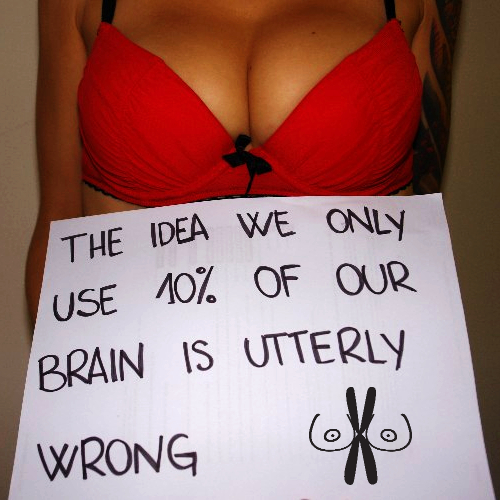
Using naked boobs to disseminate science? The Tumblr blog Boobs for Science has just proved it’s no joke. The blog requires volunteers to send photos of themselves naked or wearing underwear, together with a sign featuring a scientific statement of their choice. Some pictures are then published with a concise scientific explanation on the chosen topic.
The initiative was born in Italy, where the parent blog Tette per la Scienza has already made a splash and the Facebook page has gathered more than 20,000 fans since late October 2014. Following a few complaints of sexism, the blog has also started to welcome photos of male models.
It’s easy to get attention with naked bodies on the internet, but the blog is not just another click bait: its goal is actually to foster discussion about scientific topics. Does it actually work to engage people in science?
I spoke on the phone with Lara Tait, a 30-years old web marketer with a background in paleoanthropology. She created the blog together with her boyfriend from Milan, Italy. Below is an edited version of our interview:
Read on for my full written review and, yes, other spicy photos.
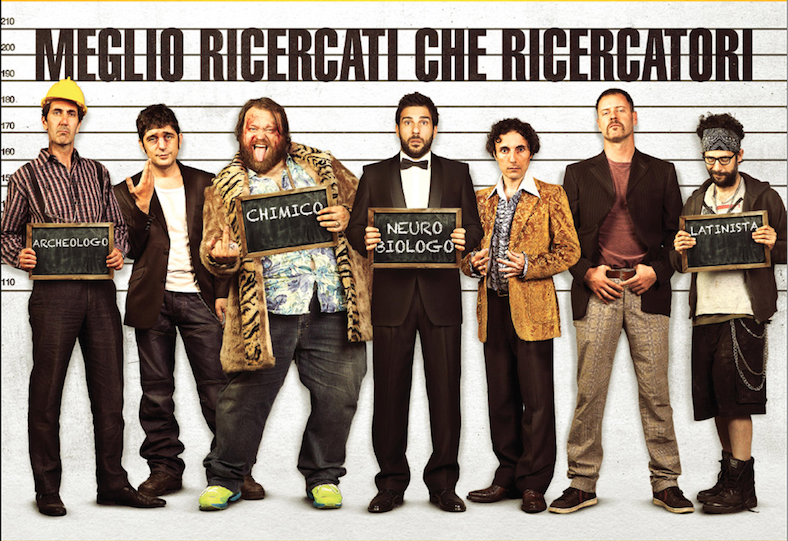
In the successful Italian comedy, Smetto quando voglio (I can quit whenever I want), a group of young and talented scholars with no career perspective turns into a successful drug-dealing mob. The story is imaginary—a surreal rendition of Breaking Bad—but it is also the portrait of Italian academia.There, the shortage of funds, baronies, and scant meritocracy hamper the careers of many endowed scientists. This fiction is not that far from reality.
Now, as an attempt to change their working conditions, Italian researchers are planning a protest movement in October, to take a stand against budget cuts and political apathy. There is no doubt that such movement is justified, but there is also a need for academics to run their universities better.
Exposure to sub-lethal doses of neonicotinoids may have a long-term effect on bees. One of Italy’s top bee researchers recommends a ban on insecticide-coated seeds and in reintroducing rotating cultures against pests invasion.